Soleilmont 5,6 MWp Agri-PV + 4.5 MWh Storage
Agrivoltaics paired with grid-scale storage, engineered, built and commissioned by SunBuild.
Agrivoltaics paired with grid-scale storage, engineered, built and commissioned by SunBuild.
5.6 MWp of agrivoltaics and a 4.5 MWh battery near Fleurus, delivered by SunBuild as one EPC scope: 9,200 panels, zero concrete, 50 ewes between the rows.

Agri-PV
Agri-PV
Date
Q2 2026
Location
Province of Hainaut Belgium
Value
5.6 MWp
Agrivoltaics paired with grid-scale storage, engineered, built and commissioned by SunBuild.
Overview
Soleilmont pairs 5.6 MWp of agrivoltaic generation with a 4.5 MWh battery, so the output can be shifted to the hours when the grid and the local network actually need it. SunBuild delivered the plant as EPC contractor — engineering, procurement, construction and commissioning of both the array and the storage system — and handed it over in May 2026. etherra developed the project and owns it.
The array is rated 5.6 MWp DC against a 3.5 MW AC grid connection. The oversizing is deliberate: paired with the battery, it lets the plant hold its connection capacity for longer each day and store the energy that would otherwise be clipped.
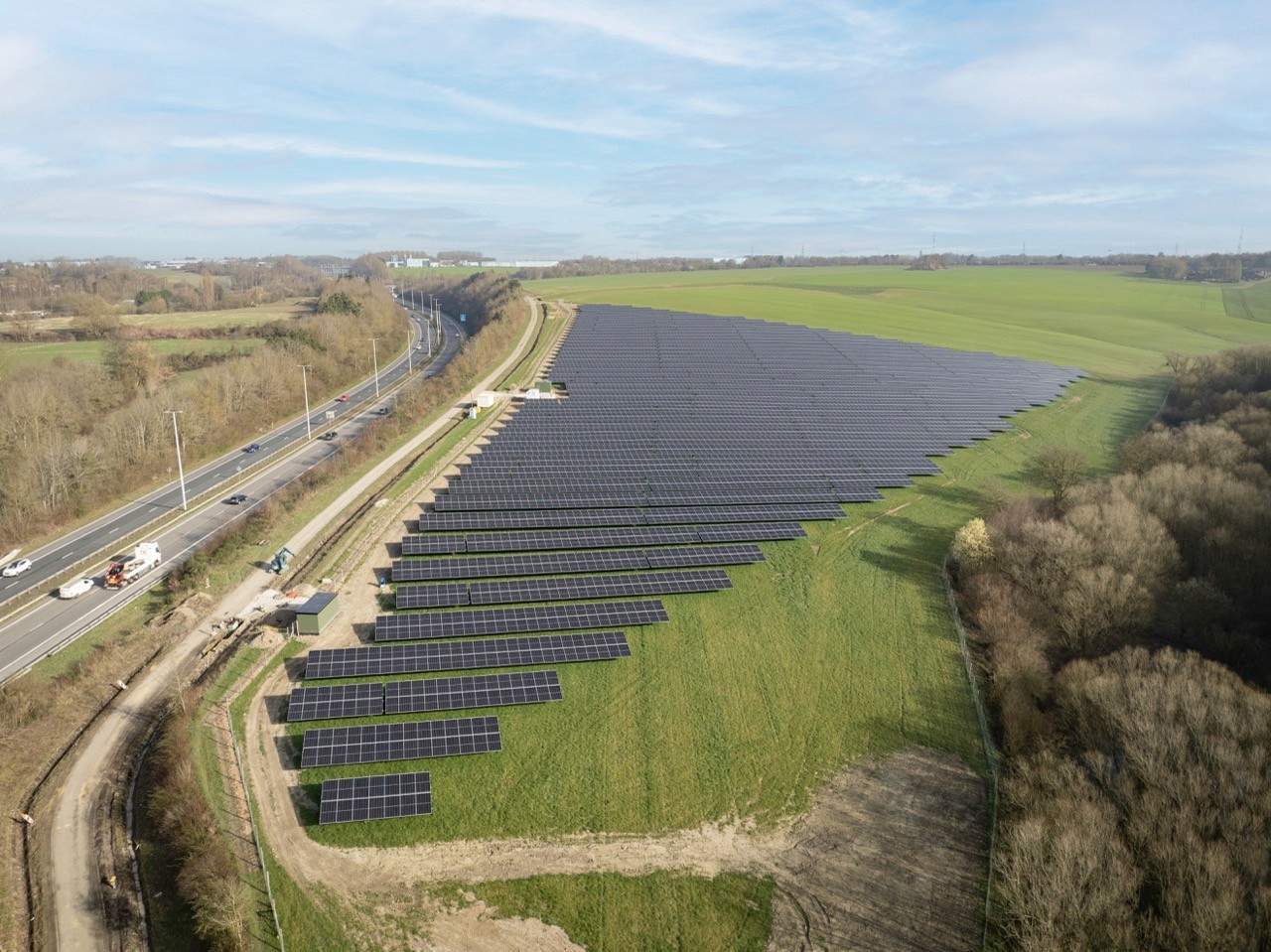
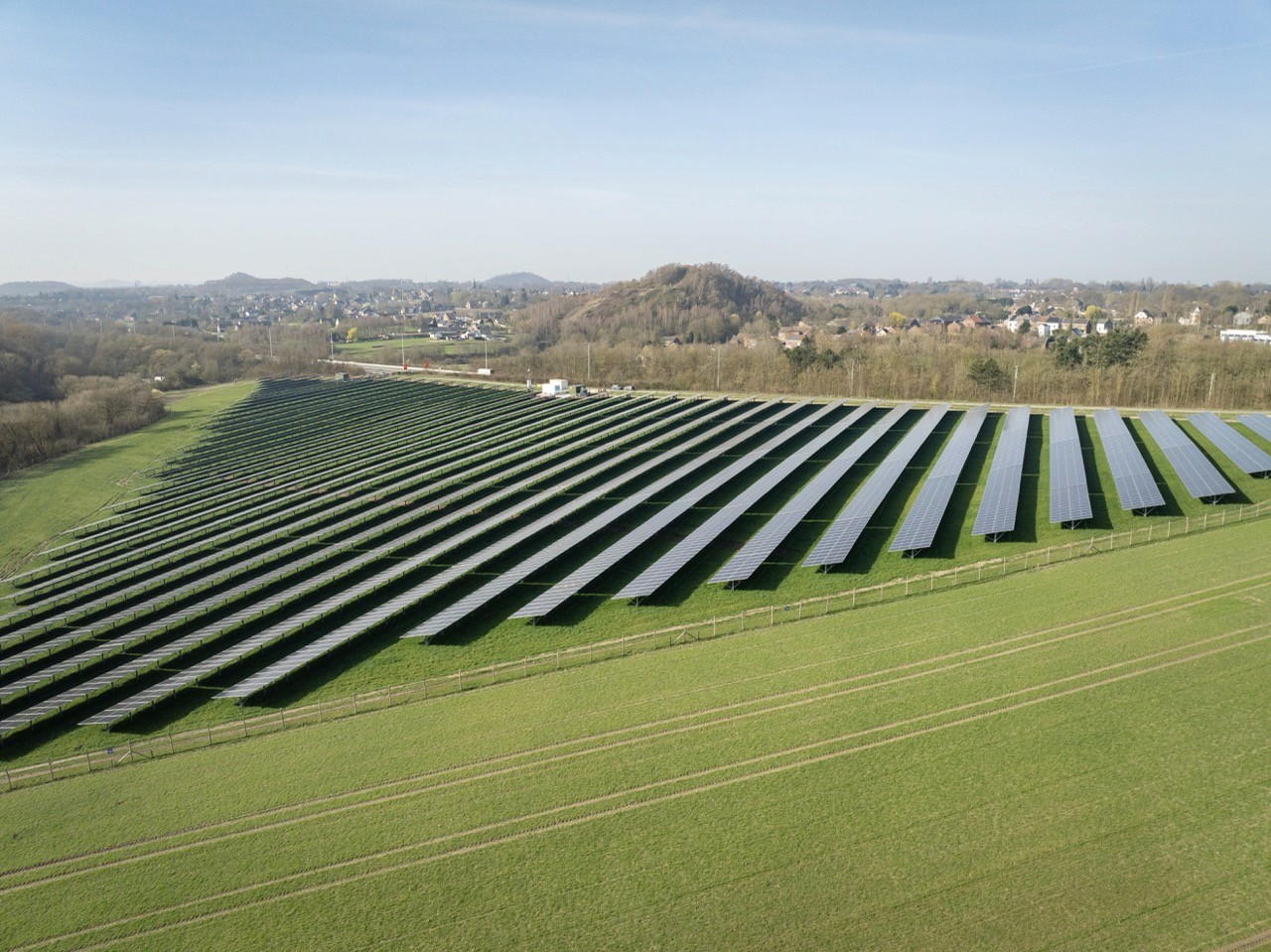
The site covers 5.7 hectares of pasture in Heppignies, in the municipality of Fleurus, between the R3 motorway and the Bois de Soleilmont, in an extraction dependency zone of the sectoral plan. 9,200 panels stand on concrete-free monopile foundations, raised one metre off the ground, and around 50 ewes from a farm in Gerpinnes graze under and between the rows. The whole plant was built under a single Class 2 permit.
Challenge
A working Pasture, not a construction site
Building on grazing land makes the construction method part of the specification rather than a detail. Concrete was ruled out: the array stands on driven monopile foundations, with no slab and no poured footings anywhere on the site, so the soil structure is preserved and the land returns to pasture at end of life.
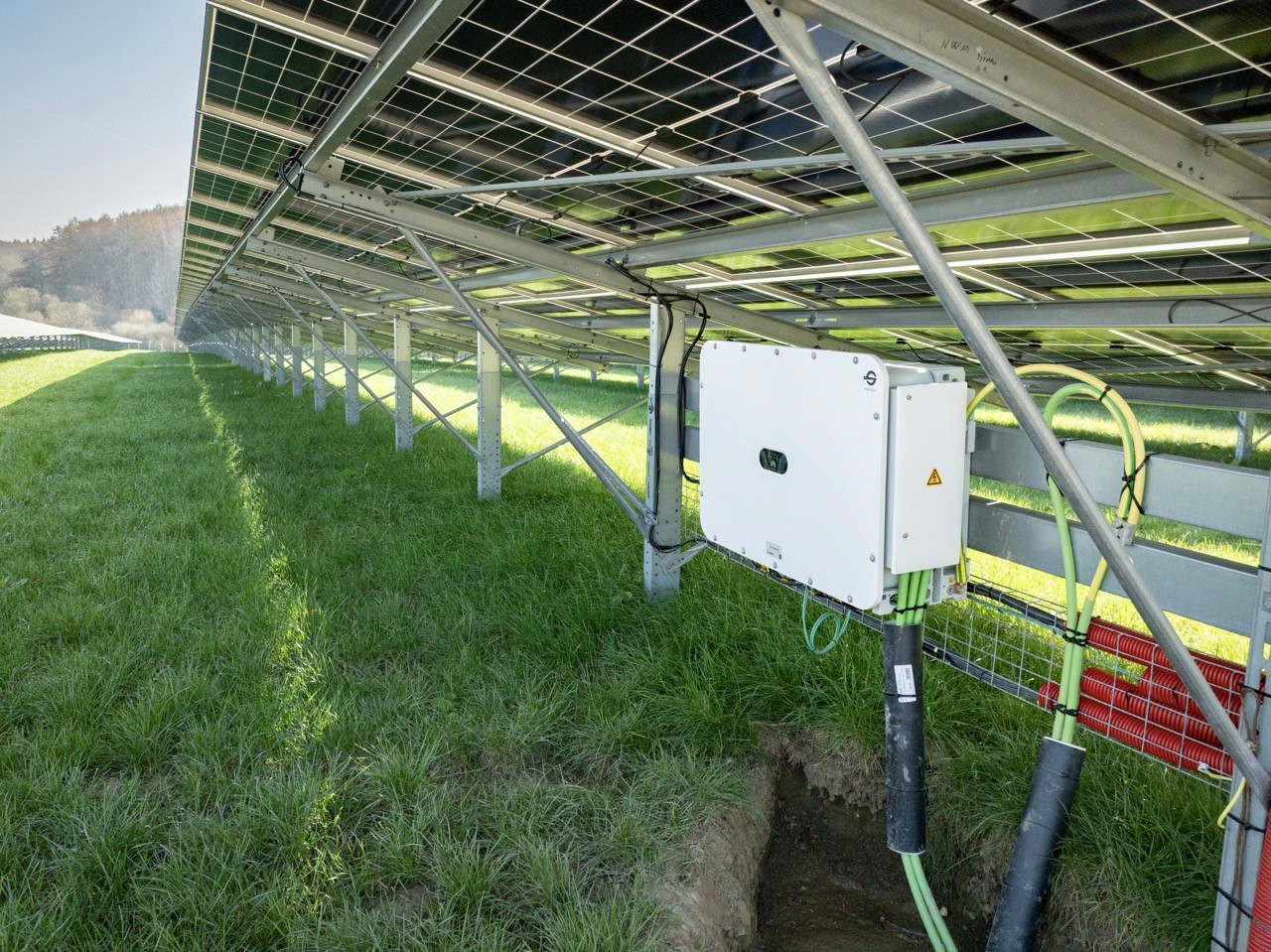
The fixed structures are set one metre above ground — high enough for the ewes to move freely between the rows and shelter under the panels in extreme heat or hard winter conditions, low enough to keep the array stiff under wind load. The array occupies 2.4 hectares. The rest of the site carries a three-paddock rotational grazing system sown with grasses and shade-tolerant clovers, 1.2 hectares of extensive flowering meadow, and 445 metres of hedgerow along the western boundary, planted with thorny species for nesting birds with the support of "Yes We Plant". The farm is worked extensively, without chemical inputs, and the meat is sold through short supply chains.
Environmental Transition
A hedge of approximately 445 metres runs along the western boundary of the site, planted with species similar to those already present. The mix was chosen to provide protected habitat for birds, with thorny species, and planted with the support of "Yes We Plant". A further 1.2 hectares are managed as extensive meadow, creating a transition between open and wooded environments and widening the habitat available to local wildlife.
Solution
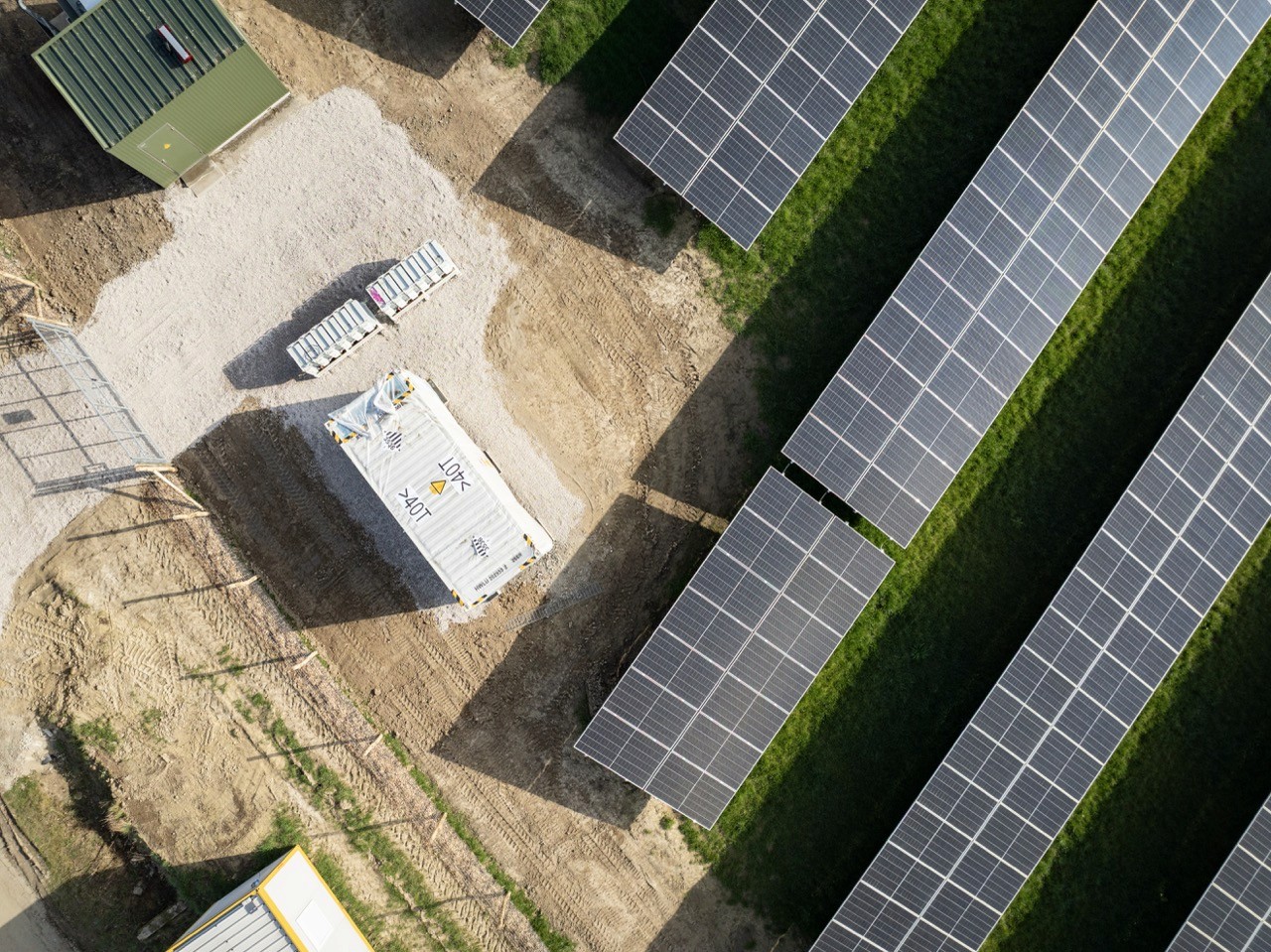
A plant that only produces is worth less than one that responds. Soleilmont pairs the array with a 4.5 MWh battery: electricity generated in the middle of the day is stored and released at peak demand, turning a variable output into a firm one.
The storage was in SunBuild's scope from the start — specified, procured, installed and commissioned alongside the array, not added by a separate contractor afterwards. That is the difference between a solar plant with a battery attached and a hybrid plant designed as one: the electrical layout, the inverters, the protection scheme and the storage interface were sized together, and a single contractor answered for the whole system at commissioning.
The plant has been in service since May 2026 and is built for thirty years of operation, producing 6,000 MWh a year — the equivalent of around 1,700 Belgian households. It is compatible with a Renewable Energy Community, and discussions are under way with public and private off-takers for a local supply chain.
SunBuild is a Belgian EPC contractor for utility-scale solar PV and hybrid PV+BESS plants in Belgium, France and Luxembourg. On Soleilmont, etherra developed and owns the asset; the engineering, the construction and the commissioning are ours.

Application
Agri-PV
Date
Q2 2026
Location
Province of Hainaut Belgium
Size
5.6 MWp
Agrivoltaics paired with grid-scale storage, engineered, built and commissioned by SunBuild.
Overview
Soleilmont pairs 5.6 MWp of agrivoltaic generation with a 4.5 MWh battery, so the output can be shifted to the hours when the grid and the local network actually need it. SunBuild delivered the plant as EPC contractor — engineering, procurement, construction and commissioning of both the array and the storage system — and handed it over in May 2026. etherra developed the project and owns it.
The array is rated 5.6 MWp DC against a 3.5 MW AC grid connection. The oversizing is deliberate: paired with the battery, it lets the plant hold its connection capacity for longer each day and store the energy that would otherwise be clipped.
The site covers 5.7 hectares of pasture in Heppignies, in the municipality of Fleurus, between the R3 motorway and the Bois de Soleilmont, in an extraction dependency zone of the sectoral plan. 9,200 panels stand on concrete-free monopile foundations, raised one metre off the ground, and around 50 ewes from a farm in Gerpinnes graze under and between the rows. The whole plant was built under a single Class 2 permit.
Challenge
A working Pasture, not a construction site
Building on grazing land makes the construction method part of the specification rather than a detail. Concrete was ruled out: the array stands on driven monopile foundations, with no slab and no poured footings anywhere on the site, so the soil structure is preserved and the land returns to pasture at end of life.
The fixed structures are set one metre above ground — high enough for the ewes to move freely between the rows and shelter under the panels in extreme heat or hard winter conditions, low enough to keep the array stiff under wind load. The array occupies 2.4 hectares. The rest of the site carries a three-paddock rotational grazing system sown with grasses and shade-tolerant clovers, 1.2 hectares of extensive flowering meadow, and 445 metres of hedgerow along the western boundary, planted with thorny species for nesting birds with the support of "Yes We Plant". The farm is worked extensively, without chemical inputs, and the meat is sold through short supply chains.
Environmental Transition
A hedge of approximately 445 metres runs along the western boundary of the site, planted with species similar to those already present. The mix was chosen to provide protected habitat for birds, with thorny species, and planted with the support of "Yes We Plant". A further 1.2 hectares are managed as extensive meadow, creating a transition between open and wooded environments and widening the habitat available to local wildlife.
Solution
A plant that only produces is worth less than one that responds. Soleilmont pairs the array with a 4.5 MWh battery: electricity generated in the middle of the day is stored and released at peak demand, turning a variable output into a firm one.
The storage was in SunBuild's scope from the start — specified, procured, installed and commissioned alongside the array, not added by a separate contractor afterwards. That is the difference between a solar plant with a battery attached and a hybrid plant designed as one: the electrical layout, the inverters, the protection scheme and the storage interface were sized together, and a single contractor answered for the whole system at commissioning.
The plant has been in service since May 2026 and is built for thirty years of operation, producing 6,000 MWh a year — the equivalent of around 1,700 Belgian households. It is compatible with a Renewable Energy Community, and discussions are under way with public and private off-takers for a local supply chain.
SunBuild is a Belgian EPC contractor for utility-scale solar PV and hybrid PV+BESS plants in Belgium, France and Luxembourg. On Soleilmont, etherra developed and owns the asset; the engineering, the construction and the commissioning are ours.
Infos
Cours Saint-Michel 30B, 1040 Etterbeek
+32 474 792 892
Copy mail
copy mail
Vacancies
Follow us

Powering a brighter future.
Infos
Cours Saint-Michel 30B,
1040 Etterbeek
+32 474 792 892
Copy mail
copy mail
Vacancies
Follow us
Powering a brighter future.
© Crafted by
SunBuild
Infos
Cours Saint-Michel 30B, 1040 Etterbeek
+32 474 792 892
Follow us
Powering a brighter future.
Infos
Cours Saint-Michel 30B, 1040 Etterbeek
+32 474 792 892